Home cleaning details are easy to miss when the middle of a room looks tidy. The narrow strip beside a cabinet, the lower window grille and the rim behind a basin can still need attention. This photo guide from Safe Cleaning Service shows the kinds of small areas worth including in a home deep cleaning visit in Dhaka.
The supplied project photographs show floor-edge work, kitchen window cleaning and a bathroom basin. They illustrate areas to inspect, rather than a measured before-and-after comparison. Use the checklist below to agree on the work before a visit and review the accessible areas afterwards.
1. Home cleaning details around floor edges
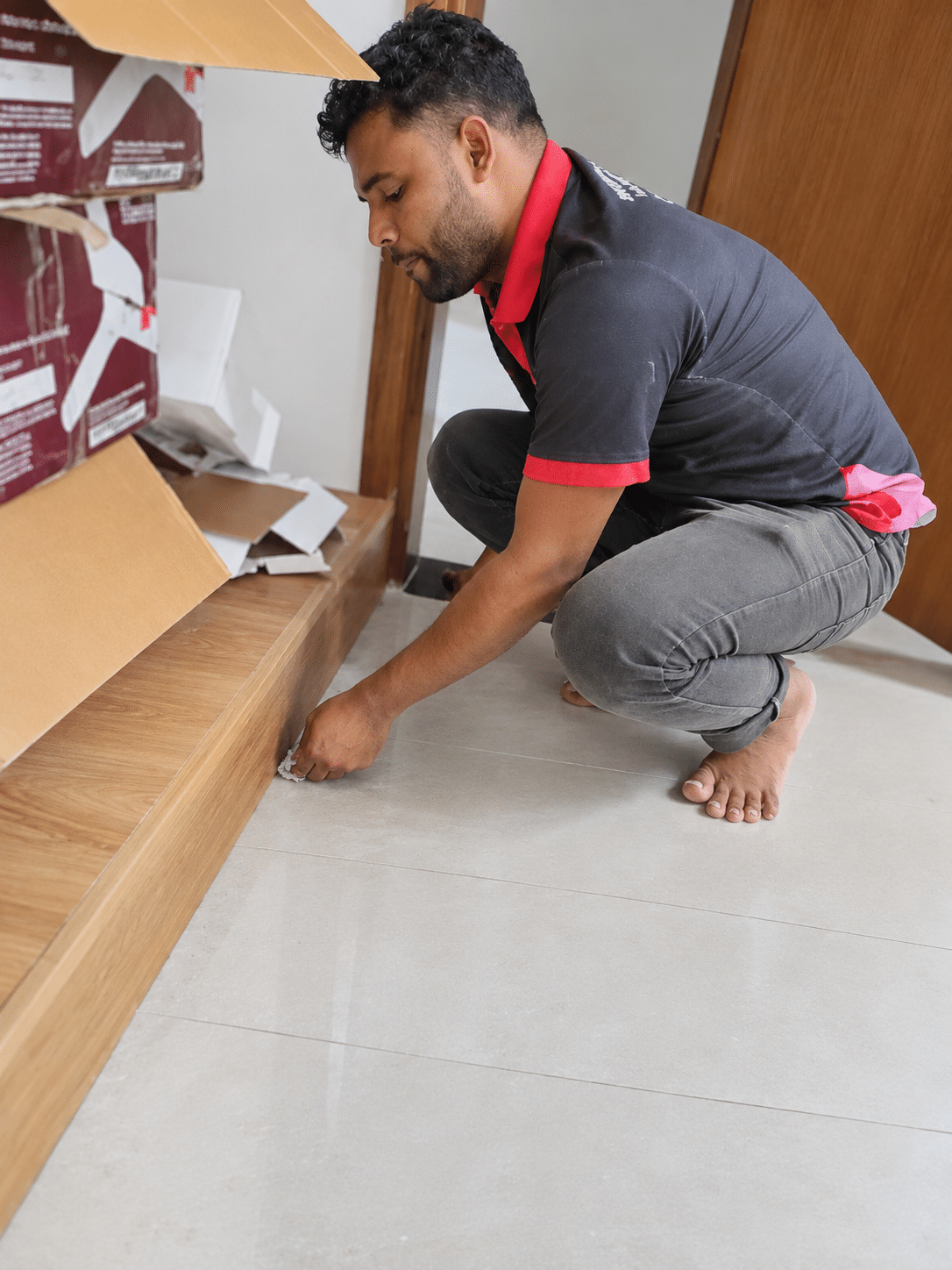
A mop can pass over an open floor while leaving dust along a cabinet base. Corners, door frames and the line where furniture meets the floor deserve a closer look. In the floor-cleaning photograph, a team member is working directly beside a wooden cabinet, a good example of the detail work that can be missed during a quick tidy.
Before work begins, move loose packaging and small belongings out of the agreed area. Point out loose trim, swollen wood, chipped tiles or an existing mark. The team can then distinguish ordinary surface dirt from damage that cleaning will not repair. Heavy furniture should only be moved when the arrangement and access allow it.
Inspect the floor perimeter, not just the centre of the room.
Include reachable cabinet bases and doorway corners in the scope.
Ask how delicate finishes and nearby belongings will be protected.
Review the area once it is ready to walk on and easy to see.
AI-enhanced illustration based on a supplied work photograph.
2. Window grilles, frames and lower corners
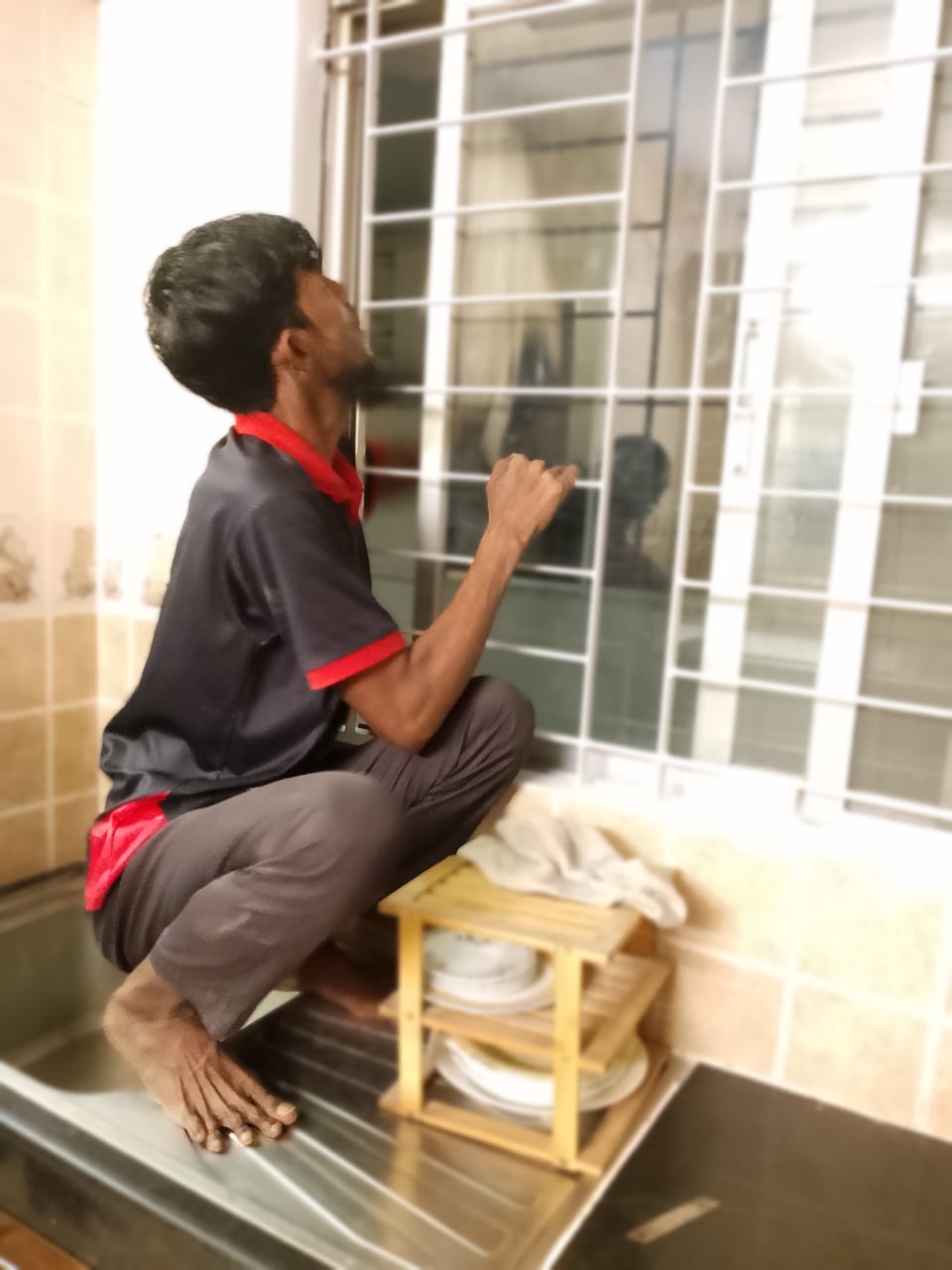
Glass is only one part of a window. Dust can collect around grille intersections, frame edges and the lower sill. Kitchen windows may also need attention around the nearby counter and dish-storage area. A useful window-cleaning scope names each accessible component rather than simply saying “clean the windows.”
Clear dishes, utensils and loose items before the team starts. Agree which side of the glass is accessible and whether tracks, grilles and frames are included. High or awkward windows require a suitable access arrangement; a photograph of work in progress should not be treated as an instruction for reaching a window yourself.
These home cleaning details are easier to review in daylight. Look at the lower frame, corners and grille joints, then check the glass from more than one angle. An unreachable exterior surface, damaged seal or scratched pane should be recorded separately from a cleaning issue.
Kitchen window and grille work: original supplied photograph.
3. Basin rims, tap bases and surrounding counters
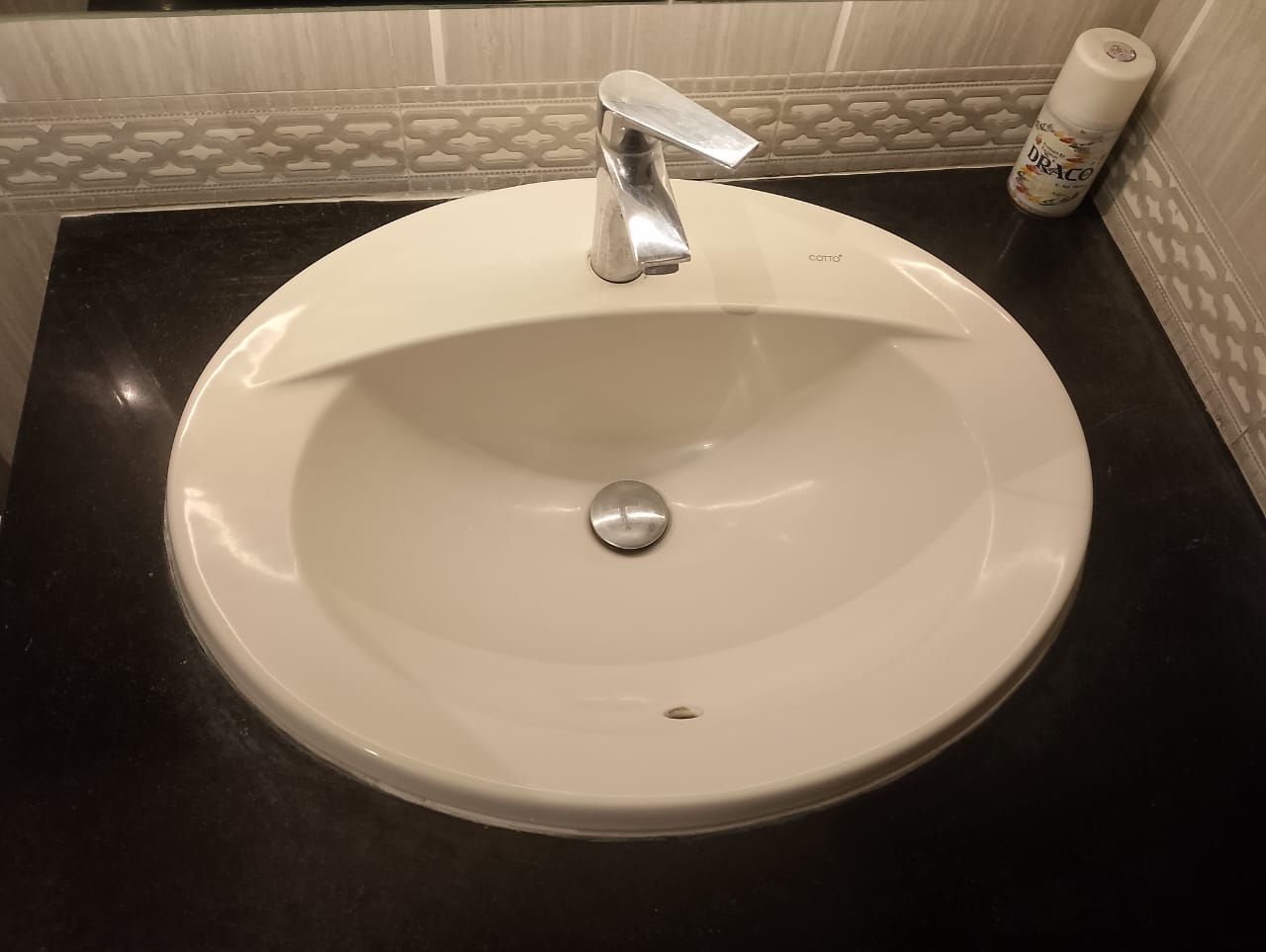
A bathroom basin has several distinct areas: the bowl, rim, drain surround, tap base and adjoining counter. The photograph in this guide helps show why a basin should be inspected as a complete fixture. A shiny bowl alone does not tell you whether the narrow space behind the tap has received attention.
Remove personal toiletries and tell the team about delicate stone, worn plating or loose fittings. Ask for a method suitable for the actual surface. Keep the product model handy and consult manufacturer information, such as the COTTO sanitary ware catalogue, when identifying a fixture. Existing scratches, discoloration and damaged seals may remain after cleaning, so discuss expectations before the job rather than assuming every visible mark can disappear.
Check the rim and the reachable area behind the tap.
Include the counter edge around the basin.
Distinguish surface buildup from a damaged finish.
Report leaks or loose fittings as maintenance concerns.
Basin rim, tap base and surrounding counter: original supplied photograph.
4. Turn home cleaning details into a clear scope
Before booking, send room photographs and explain your priorities. Mention the number of rooms, bathrooms and windows, whether the home is occupied, and any access restrictions. A cleaning team can give a more useful scope when it knows about furniture, stored boxes and delicate surfaces.
Our home deep cleaning service is the relevant starting point for discussing these areas together. Confirm the included tasks, excluded work and quotation before the visit. Window access, heavy-item movement and specialist stain treatment should be discussed explicitly rather than assumed.
For a smoother appointment, read our home deep cleaning preparation checklist. Clearing access and identifying priorities helps the team spend more of the visit on the agreed cleaning work.
5. Finish with a practical walkthrough
Walk through the agreed rooms with the team before closing the job. Start with the areas you identified at booking: cabinet edges, window frames and bathroom fixtures. Review accessible surfaces in good light and identify any missed spot while the team is still available to discuss it.
Keep the review specific. “Please check this lower window corner” is more useful than a general impression that a room needs more work. Note any area excluded because it was inaccessible, and separate repair needs from cleaning tasks. A short checklist of home cleaning details creates a shared record of what was included.
Common questions about home cleaning details
Does deep cleaning include every hidden area?
Only the agreed, accessible areas should be assumed included. Ask about inside cabinets, behind heavy furniture, exterior windows and high surfaces when requesting a quotation.
Can I book help for only the bathroom or windows?
Contact the team with photographs and the exact areas you want cleaned. Availability and the work scope can then be confirmed for your property.
Are these before-and-after results?
No. These are photographs supplied from cleaning work and a basin view. Any AI-enhanced version is labelled as an edited illustration; it is not evidence of a measured improvement or a guarantee of the same result in another home.
How do I request a visit in Dhaka?
Contact Safe Cleaning Service with your location, room details, preferred date and priority areas. You can also call 01911-204891 to discuss the scope. Confirm the quotation and availability before making arrangements.