
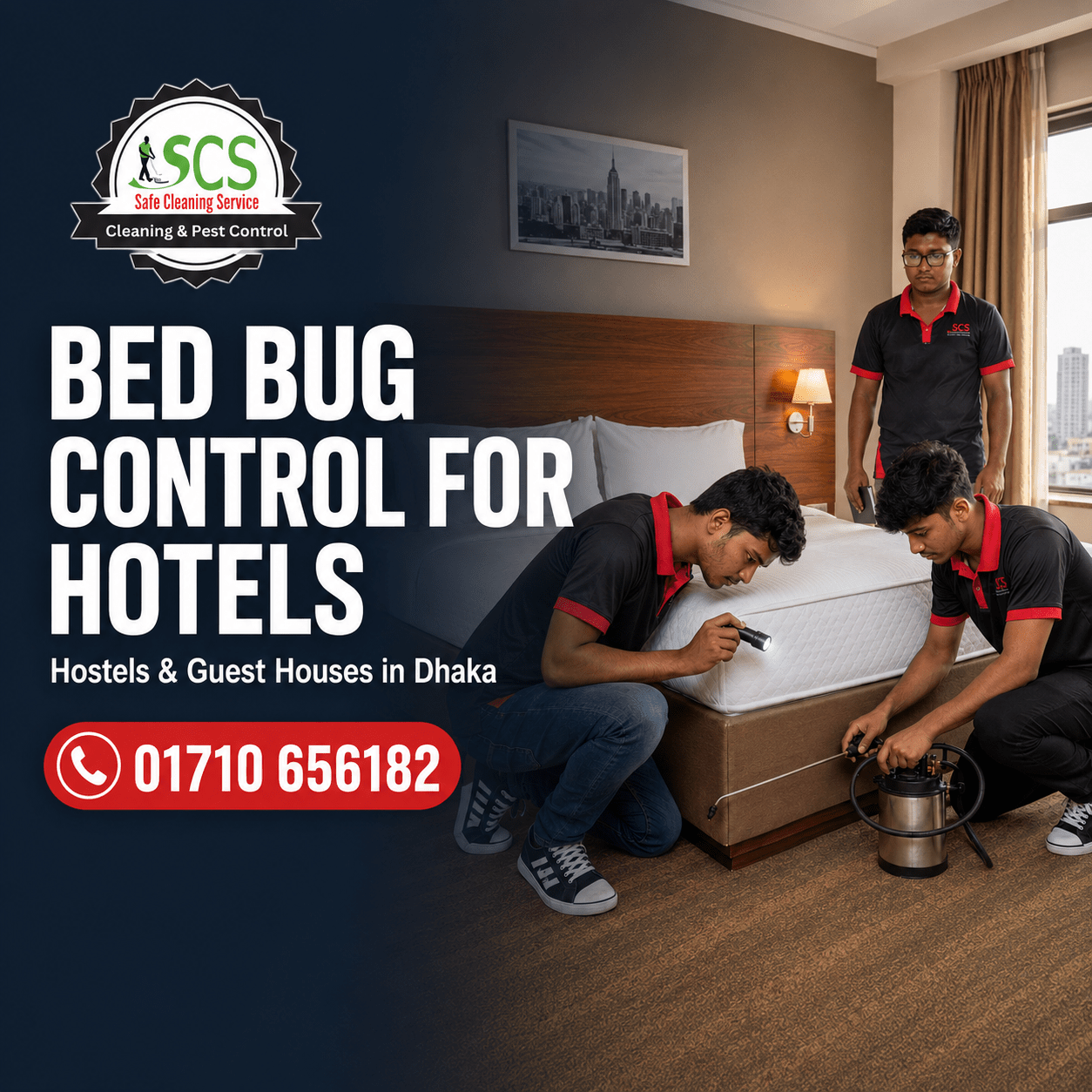
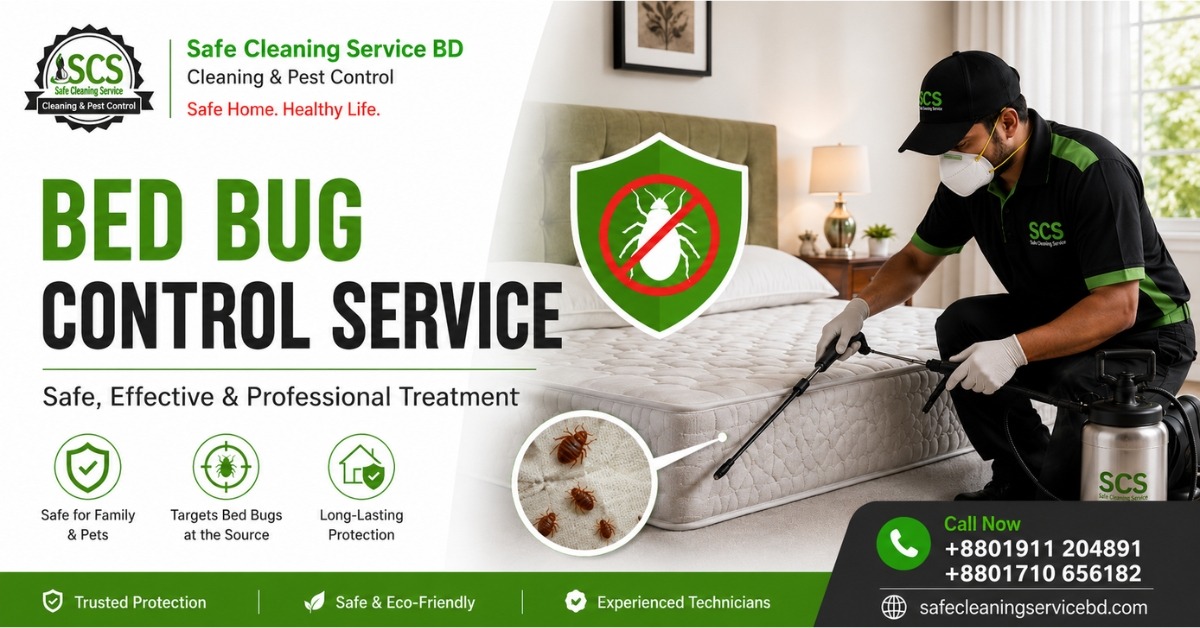
Bed bug control for hotels, hostels and guest houses in Dhaka starts with early detection and a clear response plan. This practical guide explains how hospitality businesses can inspect rooms, support guests and arrange professional treatment with proper follow-up.
Quick answer: If bed bugs are suspected, take the room out of service and avoid moving furniture or loose items through the property. Record the complaint, arrange a professional inspection and check nearby rooms. A professional bed bug control for hotels plan in Dhaka should combine inspection, preparation, targeted treatment, monitoring and follow-up. One quick spray is rarely a dependable solution.
Bed bugs can affect hotels, hostels and guest houses at any price level. They usually arrive hidden in luggage, clothing, bedding or used furniture. A manageable incident can become a wider problem when detection is late. Staff need to know the signs, and managers need a written response plan with clear records.
This article is written for hotel owners, hostel managers, guest house operators, housekeeping supervisors and facility teams in Dhaka. It gives an operational plan that can be adapted to a small property or a large hospitality business. For a site-specific inspection, visit the Safe Cleaning Service BD Bed Bug Control page or call 01710-656182.
Bed Bug Control for Hotels in Dhaka: Why a Plan Matters
A hospitality property receives people and belongings from many places every day. A guest may unknowingly carry a bed bug in a suitcase seam. Another may bring one in a backpack, folded jacket or blanket. The insect can then hide near the bed before anyone sees it. High room turnover creates repeated opportunities for introduction.
The business impact can be larger than the treatment bill. Rooms may remain unavailable during inspection and follow-up. Staff time is used for guest support and preparation. A slow response may also turn a private complaint into a public review. A written plan helps the property respond quickly.
Protect Occupancy
Early reporting can limit how many rooms need inspection or treatment. It may also reduce avoidable room closures.
Protect Guest Trust
A calm response shows that management takes hygiene concerns seriously and has a process for resolving them.
Protect Operations
Written steps help reception, housekeeping, laundry and maintenance teams act consistently instead of improvising.
A realistic plan should focus on early detection rather than claiming that bed bugs can never enter the building. Hospitality guidance collected by the US Environmental Protection Agency explains that lodging businesses should combine staff awareness, regular inspection and professional pest management. That approach is more useful than waiting for several guests to complain.
What Bed Bugs Are and What They Are Not
Bed bugs are small, flat, wingless insects that feed on blood while people or animals sleep. Adults are usually reddish-brown. Their flat bodies allow them to hide in narrow seams, joints and cracks. Common hiding places include mattress piping, bed frames, headboards, upholstered chairs, bedside furniture, wall gaps and carpet edges.
Bed bugs are not a sign that a hotel is dirty. According to the US Centers for Disease Control and Prevention, they can be found in clean properties and high-end resorts. Cleanliness alone does not determine whether they are present. However, clutter and damaged furniture can create more hiding places. Poor reporting can also allow a small problem to spread.
Bed bugs are not known to spread disease to people. Their bites can still cause itching and lost sleep. Some people may develop an allergic reaction, while others show no visible marks. Scratching can sometimes lead to a secondary skin infection. A hotel should never diagnose a guest’s skin condition. Staff can listen, document the concern and arrange inspection. A guest with a strong reaction should be advised to seek medical guidance.
Important distinction: Bite marks alone cannot confirm a bed bug infestation. Mosquitoes, fleas, skin irritation and other causes can look similar. Confirmation should come from physical evidence or an inspection by a knowledgeable professional.
Seven Signs of Bed Bugs in a Hotel or Hostel Room
Housekeeping staff are often the first people able to notice warning signs. They see rooms between guests and work close to beds, linen and furniture. A short inspection during room turnover can reveal a problem before the next guest checks in.
- Live bed bugs: Adults or younger bugs may be seen around mattress seams, headboard joints or furniture cracks. Younger insects can be much smaller and lighter in colour.
- Dark spotting: Small dark or rusty marks may appear near seams, bed frames or hiding areas. These can be associated with bed bug droppings.
- Small blood marks: Crushed insects may leave small reddish stains on sheets, pillowcases or mattress covers.
- Eggs and eggshells: Tiny pale eggs can be attached inside cracks or fabric folds. They are difficult to notice without a careful look.
- Shed skins: Bed bugs shed their outer skin as they grow. Empty skins can collect close to harbourage areas.
- Guest reports: Guests may report seeing an insect, finding spots or waking with unexplained itchy marks. Treat the report seriously without confirming the cause before inspection.
- Repeated complaints from one area: Complaints linked to the same room, floor or group of nearby rooms should trigger a wider review.
Do not limit the search to the top of the mattress. Check the piping, labels, underside, box spring, bed frame and the point where the headboard meets the wall. Look inside bedside tables and drawer joints. Inspect sofa seams, curtains close to the bed, luggage racks and carpet edges. In dormitory hostels, inspect every bunk level because the source may not be the bed where the first complaint occurred.
How Bed Bugs Enter and Move Through Hospitality Properties
Bed bugs usually move as hidden passengers. They can enter through luggage, backpacks, folded clothes, pillows or blankets. Used mattresses and second-hand upholstered furniture can also introduce them if items are brought inside without inspection. Staff belongings may be another route, so employee locker rooms and break areas should be included in awareness plans without blaming individual workers.
Once inside, bed bugs may remain close to a sleeping area or move into nearby spaces. They can hide in wall gaps, service openings and furniture. For this reason, inspecting only the reported bed is not enough. When evidence is confirmed, rooms beside the affected room should be checked. Rooms above and below may also need inspection. The final scope should be decided after reviewing the property layout and the level of activity.
Risk controls are straightforward. Train staff to recognise signs. Inspect used furniture before it enters the building. Bag suspected linen inside the room. Check nearby rooms when activity is confirmed. Employee reporting should be confidential and free from blame.
What to Do When a Guest Reports Bed Bugs
The first response shapes the rest of the incident. Reception staff should not argue with the guest or state that the property cannot have bed bugs. They should also avoid making a medical diagnosis. The right approach is respectful, calm and organised.
Listen and Record
Thank the guest for reporting the concern. Record the room number, date, time, location of the evidence and any photo or specimen offered by the guest.
Support the Guest
Follow the property’s service policy for a room change or other support. Avoid carrying loose belongings through the building before a safe handling plan is agreed.
Take the Room Offline
Stop new bookings for the room. Do not remove furniture, bedding or soft items until the room has been inspected and transport instructions are clear.
Arrange Inspection
Contact an experienced pest control service. Share the complaint record and any evidence that staff collected.
Check Connected Areas
Inspect adjacent rooms and other areas recommended by the professional. This may include rooms above, below or across a shared service area.
Document Follow-up
Record the inspection result, preparation steps, treatment date, products or methods used, re-entry guidance and follow-up schedule.
A useful response can be simple: “Thank you for telling us. We take this concern seriously. We will move the room out of service and arrange an inspection.” Staff should use wording approved by management so every guest receives a consistent response.
Hotel Bed Bug Inspection Checklist
A quick glance at the bedsheet is not a full inspection. The inspector needs access to the furniture and enough light to examine seams and joints. Staff should not disturb suspected harbourages before the professional arrives unless they have been trained to collect evidence safely.
- Record the room number and the exact place where the concern was reported.
- Inspect sheets, pillowcases and blankets for spots, insects or shed skins.
- Check the top, bottom, piping and labels of the mattress.
- Inspect the box spring or bed base, including its underside and internal edges.
- Check bed-frame joints, screw holes and decorative grooves.
- Inspect behind and around the headboard. Maintenance help may be needed.
- Check bedside tables, drawer joints, wardrobes and luggage racks.
- Inspect sofa seams, upholstered chairs and curtains near sleeping areas.
- Check carpet edges, baseboards, wall cracks and loose wallpaper.
- Review nearby rooms and shared utility routes if evidence is confirmed.
- Record findings with clear photos where appropriate.
- Do not reopen the room until the agreed treatment and follow-up conditions are met.
Management tip: Add a short inspection field to the room-turnover checklist. Housekeeping staff do not need to dismantle furniture every day. They should know the main signs and report anything unusual before the next guest arrives.
How a Professional Hotel Bed Bug Treatment Process Works
Bed bug work should be inspection-led. The same treatment plan will not suit a single guest-house room and a multi-floor hostel. The pest control team should first understand the room layout, evidence, furniture, occupancy schedule and any treatment already attempted.
1. Initial Call and Case Review
Management shares the property location, room type, number of suspected rooms, date of the first complaint and any photos. Mention whether the site is a hotel, hostel, guest house, dormitory or staff accommodation. This helps the service team plan the inspection and advise what should remain untouched.
2. Detailed Site Inspection
The technician checks likely hiding areas and looks for physical signs. Evidence may be found in mattress seams, headboards, bed frames, furniture joints or wall edges. The team should also consider how linen, luggage and staff move through the property. If activity is confirmed, the inspection may extend to nearby rooms.
3. Room Isolation and Preparation
The room remains out of service. Preparation instructions may include bagging washable linen, reducing clutter, providing access to skirting and furniture, emptying selected drawers and keeping personal items contained. Do not carry loose linen or furniture through public areas. Moving infested items without containment can spread bugs to corridors, lifts or storage rooms.
4. Integrated Treatment Plan
Integrated Pest Management, often called IPM, combines suitable chemical and non-chemical tools with inspection and monitoring. Depending on the property, the plan may include targeted application to approved locations, vacuuming, steam or heat for suitable items, mattress encasements, crack treatment and monitoring devices. The exact choice depends on the site and should be explained before work begins.
The US EPA advises that pesticides should be one part of a wider plan. Bed bug eggs and hidden insects can survive incomplete treatment. Randomly spraying a room may scatter activity or expose guests and staff to unnecessary chemicals. Only products intended for the target pest and approved use area should be applied. Label directions, ventilation guidance and re-entry times must be followed.
5. Treatment of Connected Rooms
If evidence appears in more than one room, the service scope needs to expand. A professional may recommend inspection or treatment of rooms on either side, above or below. Dormitory layouts may require inspection of the full bunk area. Common rooms, linen stores, staff rest areas and laundry zones may also need review if there is a reasonable route of spread.
6. Monitoring and Follow-up
Follow-up is a normal part of responsible bed bug management. The timing depends on the method, site condition and life cycle stage. The property should know when the next inspection will occur and what signs staff must watch for. A room should not be reopened simply because no bug was seen immediately after treatment.
7. Prevention Advice and Records
After service, management should receive practical guidance for room turnover, linen handling and future complaints. Keep an incident file with the room number, inspection result, treatment scope, follow-up dates and final status. These records help reveal repeat patterns and show that the property responded in an organised way.
Service accuracy note: No responsible provider should promise that one spray will solve every bed bug case. Ask for the preparation checklist, treatment scope, safety instructions and follow-up terms before confirming service.
Different Plans for Hotels, Hostels and Guest Houses
Bed Bug Control for Hotels
Hotels usually have more rooms, separate housekeeping teams and tighter occupancy targets. The plan should include staff training, a complaint log, clear authority to take a room offline and coordination between reception, housekeeping, maintenance and management. Larger properties should map room numbers so adjacent spaces can be identified quickly. Monthly or risk-based inspection can be added to the pest management schedule.
Bed Bug Control for Hostels and Dormitories
Hostels have shared rooms and frequent movement of backpacks, bedding and guests. One reported bunk may not be the only area involved. Inspect the whole dormitory zone and nearby sleeping spaces. Storage lockers, common lounges and shared laundry routes can also matter. Provide guests with clear bagging and laundry instructions so belongings are not moved loosely between rooms.
Bed Bug Control for Guest Houses
Guest houses may have fewer rooms and a small team, but one closed room can represent a large share of available occupancy. The owner or manager should keep a simple written checklist. Identify a pest control contact in advance. Keep heavy-duty sealable bags, a flashlight and a complaint form ready. Inspect used furniture before bringing it inside, even if it looks clean.
A Simple Bed Bug SOP for Housekeeping Teams
Housekeeping staff need short instructions that fit real work. A long technical manual may be ignored during a busy shift. Managers can print the following SOP and adapt it to their property.
| Stage | Staff Action | What Not to Do |
|---|---|---|
| Room turnover | Look at mattress seams, headboard area, bedding and nearby furniture for unusual spots or insects. | Do not ignore a small sign because the room looks clean. |
| Suspected evidence | Stop work, keep items in the room and inform the supervisor with the room number and exact location. | Do not spray household insecticide or move loose linen into the corridor. |
| Guest complaint | Inform reception or management and protect the guest’s privacy. | Do not argue, blame the guest or make a medical diagnosis. |
| Preparation | Follow the written checklist from the pest control team. Bag linen before transport. | Do not remove furniture unless the treatment team gives instructions. |
| After treatment | Observe re-entry guidance and report any new sign during follow-up. | Do not reopen the room only because it smells clean or appears normal. |
Training can use real photos of adult bed bugs, younger stages, dark spotting and shed skins. Staff should understand that reporting is positive. It allows the property to act early. Managers should never punish an employee for raising a reasonable concern.
Laundry and Linen Handling During a Bed Bug Incident
Linen handling can accidentally move bed bugs through a property. Suspected sheets, blankets, pillowcases, curtains or clothing should be contained before leaving the room. Use strong sealable bags and label them according to the property’s procedure. Do not drag open linen bundles through corridors.
Heat can be useful when fabrics tolerate it. The EPA notes that a high-temperature dryer cycle can kill bed bugs and that washing alone may not be enough. Equipment settings and fabric care labels vary, so the property should use a process approved for its machines and linen type. Do not mix suspected linen with clean inventory before treatment.
After processing, place clean items in fresh bags or covered containers. Clean and inspect laundry carts. Review the route from guest room to laundry so suspect items do not pass through linen stores or touch clean stock. Staff handling the bags should receive simple personal protection and hand-hygiene guidance from management.
Common Hotel Bed Bug Control Mistakes
- Using random aerosol spray: Visible bugs may die, while eggs and hidden insects remain. Unplanned spraying can also interfere with professional treatment.
- Moving furniture immediately: Carrying an uncovered mattress or chair through the property may spread insects to other areas.
- Treating only the reported bed: Headboards, bedside furniture, sofas and nearby rooms may also contain evidence.
- Reopening the room too soon: The absence of an immediate sighting does not prove that every life stage is gone.
- Ignoring adjacent rooms: Connected rooms need consideration when activity is confirmed.
- Blaming guests or staff: Blame reduces early reporting and can make reputation problems worse.
- Relying only on bite marks: Physical evidence and professional inspection are needed for confirmation.
- Skipping follow-up: Bed bug control often requires monitoring and another visit according to the treatment plan.
- Overusing chemicals: More product does not mean better control. Incorrect use can create health risks and legal problems.
- Keeping poor records: Without room and date records, management may miss a repeated pattern.
Another mistake is choosing a provider only by the lowest price. A cheap one-time spray may not include inspection, preparation advice or follow-up. Compare the full service scope. Ask what rooms will be checked, what preparation is required, how safety will be managed and when the property can expect follow-up.
Bed Bug Control for Hotels: Cost Factors in Dhaka
There is no accurate flat price for every hotel bed bug treatment. Cost depends on the size and condition of the property. A single confirmed room in a guest house is different from suspected activity across several hostel dormitories. An estimate should be based on enough information to define the likely work.
Common price factors include:
- Number of suspected and confirmed rooms
- Room size and furniture layout
- Level and duration of the infestation
- Need to inspect adjacent rooms or shared spaces
- Type of treatment and equipment required
- Amount of preparation support needed
- Number and timing of follow-up visits
- Property location and access conditions
- Whether work must be scheduled around guests or business hours
For a useful estimate, share your location, property type, approximate number of rooms, room numbers involved and the signs that were found. Photos can help with the initial discussion, but they do not replace inspection. Safe Cleaning Service BD provides a free estimate after reviewing the service requirement. Call 01710-656182 or 01911-204891.
Need Bed Bug Control for a Hotel, Hostel or Guest House?
Share your Dhaka location, property type, affected room details and preferred inspection time. Our team will review the requirement and guide you on preparation, treatment and follow-up.
How to Choose a Hotel Pest Control Provider in Dhaka
A provider working in hospitality needs more than a sprayer. The team must understand room isolation, guest privacy, linen routes, adjacent-room inspection and follow-up. Ask practical questions before approving the work.
Questions to Ask
- Will you inspect before recommending treatment?
- Which rooms and connected areas should be checked?
- What must staff do before the visit?
- What chemical and non-chemical methods may be used?
- What are the safety and re-entry instructions?
- When will follow-up take place?
- What is included in the quoted price?
Useful Service Records
- Inspection report or case notes
- Room numbers included in the work
- Preparation checklist
- Treatment date and method
- Safety and re-entry guidance
- Follow-up date
- Final monitoring result
Be careful with absolute promises. Bed bugs are difficult pests and results depend on inspection, preparation, treatment coverage and follow-up. A good provider explains these limits clearly. If a warranty or free follow-up is offered, ask for the conditions. Customer preparation and laundry compliance may be part of those terms.
Why Choose Safe Cleaning Service BD?
Safe Cleaning Service BD supports homes and businesses with cleaning, pest control and manpower services. For hospitality clients, this combined experience helps the team understand guest rooms, furniture, housekeeping routines and commercial scheduling. The business provides booking support 24 hours a day and serves Dhaka and nearby areas.
- Inspection-based bed bug treatment planning
- Support for hotels, hostels, guest houses and commercial properties
- Preparation and aftercare guidance
- Direct phone and WhatsApp booking
- Free service estimate based on the property requirement
- Related professional cleaning services for rooms and commercial spaces
If you also need room, sofa or carpet cleaning, discuss it separately so cleaning does not conflict with the pest treatment plan.
Bed Bug Prevention Plan for Hospitality Businesses
No hotel can fully control what arrives inside a guest’s luggage. Prevention in hospitality therefore means early detection, fast containment and reduced hiding places. The following plan can lower operational risk.
- Train every department: Reception, housekeeping and laundry staff should know the reporting process.
- Inspect during room turnover: Add a short visual check of bedding, mattress edges and headboard areas. Record unusual findings.
- Maintain furniture: Repair cracks, loose wallpaper and damaged bed frames that create hiding places. Keep room clutter low.
- Check used items: Inspect second-hand mattresses, sofas, chairs and wooden furniture before they enter the property.
- Protect linen routes: Keep clean and suspected linen separate. Use closed containers or sealed bags when a room is under investigation.
- Track room history: Maintain a private log of complaints, inspections and treatment. Review repeat activity by room or floor.
- Schedule professional review: High-turnover properties can discuss routine monitoring with a pest control provider.
The prevention plan should be reviewed after each confirmed case. Ask what allowed the problem to remain unnoticed. It may be a training gap, a damaged headboard or inconsistent linen containment. Correcting the process reduces the chance of repeat disruption.
Frequently Asked Questions About Hotel Bed Bug Control in Dhaka
Do bed bugs mean that our hotel is dirty?
No. Bed bugs can enter clean hotels and premium resorts through luggage, clothing or other belongings. Cleanliness does not determine whether they arrive. Good housekeeping and early reporting can still make detection easier.
Can bed bugs spread disease to hotel guests?
Bed bugs are not known to spread disease to people. Their bites may cause itching, sleep loss or, in rare cases, an allergic reaction. Hotel staff should not diagnose bite marks. A guest with a concerning reaction should seek medical advice.
Can we confirm bed bugs from bite marks alone?
No. Bite reactions vary, and several other conditions can look similar. Confirmation should be based on physical evidence or an inspection by a knowledgeable professional.
Should we move furniture out of the affected room?
Not before professional guidance. Moving an uncovered mattress, chair or other item through a corridor can spread bed bugs. Keep the room out of service and wait for containment instructions.
Which rooms should be inspected after a confirmed case?
Start with the affected room. Rooms that share walls may need inspection. Rooms above and below may also be included. The final scope depends on the building layout and evidence.
Is one chemical spray enough for hotel bed bugs?
Often it is not. Bed bugs hide in small spaces, and eggs can survive incomplete work. A suitable plan combines inspection, preparation, targeted treatment, monitoring and follow-up.
How long must a hotel room remain closed?
The closure period depends on the method, product label, ventilation needs, infestation level and follow-up result. The pest control team should provide clear re-entry and reopening guidance.
Should housekeeping staff treat bed bugs themselves?
No. Housekeeping staff should detect and report signs. Untrained pesticide use can create safety risks and may interfere with the professional treatment plan.
Can a hostel treat only the reported bunk?
The full dormitory area usually needs careful inspection because guests and belongings move between bunks. Other sleeping spaces, lockers or shared areas may also require review.
How should suspected linen be moved?
Bag it inside the room before transport. Keep it separate from clean linen and follow the agreed laundry process. Do not carry loose bedding through corridors or lifts.
How much does hotel bed bug control cost in Dhaka?
Price depends on the number of rooms, furniture, infestation level, connected areas, treatment method and follow-up requirement. Call Safe Cleaning Service BD with your property details for a free estimate.
Act Before One Complaint Becomes a Wider Problem
Keep the suspected room offline and contact Safe Cleaning Service BD. Share the room details, location and any signs you found. Get a practical inspection and treatment plan for your hotel, hostel or guest house.
Sources and Further Reading
- US Centers for Disease Control and Prevention: About Bed Bugs
- US Environmental Protection Agency: Controlling Bed Bugs Using Integrated Pest Management
- US Environmental Protection Agency: Bed Bug Resources for Hotels and Other Audiences
- Virginia Tech and Virginia Department of Agriculture: Bed Bug Action Plan for Hotels
- Vermont Department of Health: Recommendations for the Hospitality Industry
This article provides general hospitality operations and pest-awareness information. It does not replace an on-site inspection, product label instructions, medical advice or local regulatory requirements. Treatment methods and room reopening times must be decided for the specific property.
